Description /
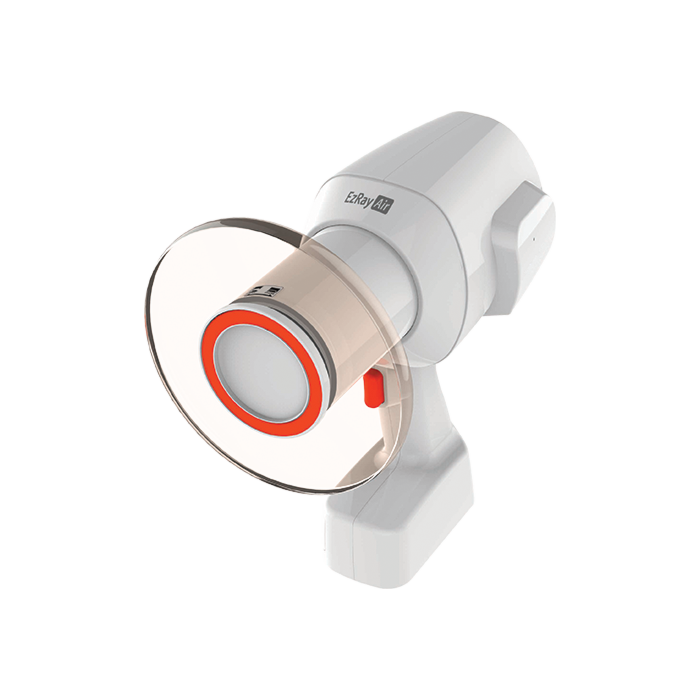
MyVet EzRay Air Vet - Hand-Held Dental X-Ray
EzRay Air Vet™ | Hand-held X-Ray System
Satisfies all primary dental diagnostic needs by stable and clear images
Lightweight Portable Innovation
The EzRay Air Vet is a lightweight portable x-ray device designed for easy handling and stable positioning for optimal image quality on your intra-oral x-rays.
Weight innovation with CNT (Carbon Nano Technology)
30% lighter than other handheld units
Lower dose
Double scatter shield design for operator safety
Lower cool down times
Faster workflow, no warm-up time
Tube voltage: 65kV
Tube current: 2.5 mA
X-ray field: 60mm round
Faster workflow, no warm-up time
2 year parts warranty
Optional remote application training
Optional on-site dental position training
Double Scatter Shield Design For Safety
INTERNAL SHIELDING: The internal radiation shielding is perfectly designed to protect the operator from radiation leakage.
EXTERNAL BACKSCATTER SHIELDING: The backscatter shield signifcantly reduces the amount of radiation being reflected.
Lower Cooldown Time, Faster Workflow
Due to unique efficiencies in Carbon Nano Technology, EzRay Air Vet has almost a 75% reduction in cooldown time between shots when compared to leading competive devices. This allows users to spend less time waiting for their x-ray to be ready and more time in treatment, diagnosis and patient.
Veterinary radiology is a specialized field that requires a unique set of skills to be successful. Here are three key skills that are essential for any veterinarian interested in pursuing a career in radiology:
Strong diagnostic skills: Radiologists are responsible for interpreting diagnostic images and identifying any abnormalities or issues that may be present. Strong diagnostic skills are essential for accurately interpreting images and making accurate diagnoses.
Knowledge of anatomy: A deep understanding of animal anatomy is critical for interpreting radiographic images. Radiologists need to know the normal appearance of various structures within the body in order to identify any abnormalities.
Communication skills: Radiologists often work as part of a larger team, and must be able to effectively communicate their findings and recommendations to other members of the team. Good communication skills are essential for working effectively with other veterinary professionals and with clients.
These three skills are essential for any veterinarian interested in pursuing a career in radiology. With the right combination of knowledge, skills, and experience, veterinarians can become experts in the field of veterinary radiology and make a valuable contribution to the health and well-being of animals.