
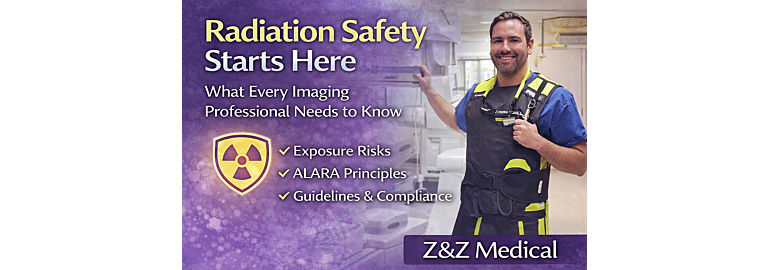
Radiation Safety in Healthcare: Guidelines, PPE & Best Practices for Imaging Professionals
Radiation Safety in Healthcare: The Foundation of Every Imaging Environment
Radiation plays a critical role in modern healthcare—from routine X-rays to advanced interventional procedures. But with that power comes responsibility. Healthcare professionals working in radiology, interventional suites, and surgical environments are routinely exposed to ionizing radiation. Over time, even low-dose exposure can accumulate, making radiation safety not just important—but essential. According to global health organizations, millions of imaging and interventional procedures are performed every year, reinforcing the need for proper protection protocols, training, and equipment.
Why Radiation Safety Matters
Without proper safeguards, repeated exposure to ionizing radiation has been linked to:
- Increased cancer risk
- Cataracts
- Skin injury and tissue damage
- Long-term cumulative health effects
This is why regulatory bodies and safety organizations emphasize structured radiation protection programs in every facility. The goal isn’t to eliminate radiation, it’s to manage and minimize exposure safely.
Understanding Radiation Exposure in Clinical Settings
Not all imaging environments carry the same level of exposure. Procedures involving fluoroscopy and C-arm imaging—especially in interventional radiology—can produce significantly higher radiation doses compared to standard diagnostic imaging. In some cases, just minutes of exposure without proper protection can approach or exceed recommended limits. That’s why safety protocols must be built into every procedure, every time.
Radiation Dose Limits: What’s Considered Safe?
Governing bodies have established exposure limits to protect healthcare workers:
- OSHA:
- 5 rem per year (whole body limit-head, trunk, gonads and active blood forming organs)
- ICRP (International Commission on Radiological Protection):
- 20 mSv annual averaged over 5 years
- No more than 50 mSv in a single year
These limits highlight an important reality: Without proper protection, exposure can add up quickly.
The 3 Core Principles of Radiation Safety (ALARA)
At the heart of radiation safety is one guiding philosophy: ALARA = As Low As Reasonably Achievable. This is achieved through three key principles:
1. Time - Minimize the amount of time spent exposed to radiation.
- Shorter procedures = lower exposure
- Training and efficiency directly impact safety
2. Distance - The farther you are from the radiation source, the lower your exposure.
- Even a few feet can significantly reduce dose
- Not always possible in interventional procedures—but critical when it is
3. Shielding - The most reliable and consistent protection.
- Lead aprons
- Thyroid shields
- Lead glasses
- Barriers and room shielding
When time and distance can’t be optimized, shielding becomes your first line of defense.
Where Most Facilities Fall Short
Even with guidelines in place, gaps still exist:
- Inconsistent PPE use
- Poorly fitted or damaged garments
- Lack of regular inspections
- Limited staff training
- Outdated or insufficient inventory
Radiation safety isn’t just about having lead aprons—it’s about having the right protective garments, properly maintained, and used correctly.
Z&Z Medical: Your Partner in Radiation Safety
Radiation protection isn’t one-size-fits-all—and it shouldn’t be. At Z&Z Medical, we work with healthcare facilities to provide:
- A wide range of radiation protection options across leading manufacturers
- Solutions for every budget, workflow, and timeline
- Guidance on selecting the right PPE and accessories
- Support for urgent replacement needs and quick-ship options
Whether you're replacing garments, upgrading protection, or building a new program—we’re here to help you make informed, confident decisions.
Have questions? Email us at info@zzmedical.com Or call 800-410-9575 to speak with our team